Investor guide
How to Buy Commercial Property in Dubai
ubai has developed into one of the world's leading real estate and business hubs, attracting entrepreneurs, investors and companies from across the globe. For investors entering the market for the first time, commercial real estate can provide exposure to rental income, business demand and long-term capital growth.
But buying commercial property is different from buying a residential apartment or villa. The right investment depends on much more than the purchase price. Location, tenant demand, permitted use, accessibility, rental income, operating costs, vacancy risk and exit potential all need to be considered.
This guide explains how to buy commercial property in Dubai and highlights the key areas first-time buyers should consider, with Jumeirah Village Circle (JVC) as a key area to evaluate.
What is commercial property?
Commercial property refers to real estate primarily intended for business, trade or income-generating purposes.
Commercial property in Dubai can include:
- Retail shops
- Office spaces
- Clinics
- Restaurants and cafés
- Warehouses
- Showrooms
- Commercial buildings
- Commercial land and plots
- Mixed-use commercial units
The appropriate property type depends on your investment objective, budget and target tenant. Before purchasing, buyers should verify the property's title, permitted use, ownership status, building regulations and any applicable community or development restrictions.
Dubai Land Department provides services and information covering property registration, title verification and licensed real estate activity.
Why buy commercial property in Dubai?
- Rental income — Commercial properties can generate rental income through leases to businesses. The actual return depends on purchase price, rental value, occupancy, tenant quality, service charges and operating expenses.
- Business ownership — Business owners may choose to purchase their premises rather than lease, giving them greater control over their operating location and long-term occupancy costs.
- Portfolio diversification — Investors with residential holdings can consider commercial real estate as another property category, providing exposure to different tenant profiles and income characteristics.
- Capital growth — Commercial properties in well-connected areas can benefit from population growth, business expansion, infrastructure investment and increasing demand for quality commercial space.
Multiple investment strategies
Commercial property can be acquired for:
- Long-term rental income
- Owner occupation
- Capital appreciation
- Leasing to businesses
- Value-add opportunities
- Portfolio diversification
Types of commercial property
Retail
Retail units can include shops, cafés, restaurants, salons, clinics, supermarkets and other customer-facing businesses. For retail, visibility and accessibility can be as important as the size of the property.
Offices
Office properties can appeal to professional services, SMEs, corporate tenants and investors seeking recurring rental income. Consider location, parking, floor efficiency, building quality, service charges, tenant demand and accessibility.
Warehouses & industrial property
Warehouses and industrial properties can serve logistics, storage, distribution, manufacturing and other operational businesses. Key factors include road connectivity, loading access, ceiling height, plot size, built-up area, permitted use and industrial demand.
Commercial buildings
Buying an entire commercial building can provide multiple potential income streams but generally requires higher capital and more extensive due diligence.
Commercial land
Commercial and industrial plots can provide development opportunities, subject to zoning, permitted use and applicable approvals.
Steps to purchase
- 1
Define your investment objective
Start with the purpose of the purchase. Are you buying for rental income, your own business, capital appreciation, development or portfolio diversification? Your answer will determine which property type and location make the most sense.
- 2
Set your total investment budget
Don't look only at the advertised purchase price. Your total acquisition budget may include purchase price, DLD registration fees, VAT where applicable, brokerage, trustee or service fees, financing costs, service charges, fit-out, maintenance, leasing costs and potential vacancy.
- 3
Choose the right location
Evaluate customer catchment, business density, residential population, road connectivity, public transport, parking, visibility, accessibility, existing tenant demand, competing supply and future development. The best location depends on the property type.
- 4
Compare individual properties
Review purchase price, price per square foot, current and market rent, gross and net yield, service charges, occupancy, tenant quality, lease terms, property condition and exit potential. Don't compare properties simply by size or asking price.
- 5
Conduct due diligence
Before committing capital, verify title deed, ownership, property status, existing mortgage or restrictions, service charges, existing tenancy agreement, outstanding dues, permitted use, building regulations and community regulations.
- 6
Review the tenant and lease
If the property is already rented, carefully review the tenancy agreement. Consider tenant profile, lease expiry, rental amount, payment history, renewal terms, rent escalation, security deposit, maintenance responsibilities and break clauses.
- 7
Negotiate the purchase
Once due diligence is complete, negotiate purchase price, deposit, payment structure, transfer date, existing tenancy, outstanding service charges, fixtures and fittings and handover conditions. Where appropriate, an independent valuation can provide another reference point.
- 8
Complete the transaction
The transaction is completed through the applicable Dubai Land Department process. Buyers should ensure that required documentation, payments and transaction conditions are properly addressed before transfer. For company purchases, additional corporate documentation may apply.
How to evaluate a commercial investment
A commercial property should never be evaluated on rental yield alone. Use this framework:
Purchase Price → Rental Income → Operating Costs → Net Income → Net Yield → Exit Potential
Gross yield
A simplified calculation is: Annual Rental Income ÷ Purchase Price × 100. For example, a property purchased for AED 4,000,000 generates AED 280,000 annual rent — a 7% gross yield. However, this does not account for service charges, vacancy, maintenance, leasing costs, brokerage and other operating expenses.
Net yield
Net yield provides a more realistic view by considering relevant operating costs. For first-time buyers, the focus should be on sustainable net income, not simply the highest advertised yield.
Top areas to consider
Dubai has a diverse commercial real estate market. The right area depends on your property type, budget, tenant profile and investment strategy.
01
Jumeirah Village Circle (JVC)
Priority area for first-time commercial buyers
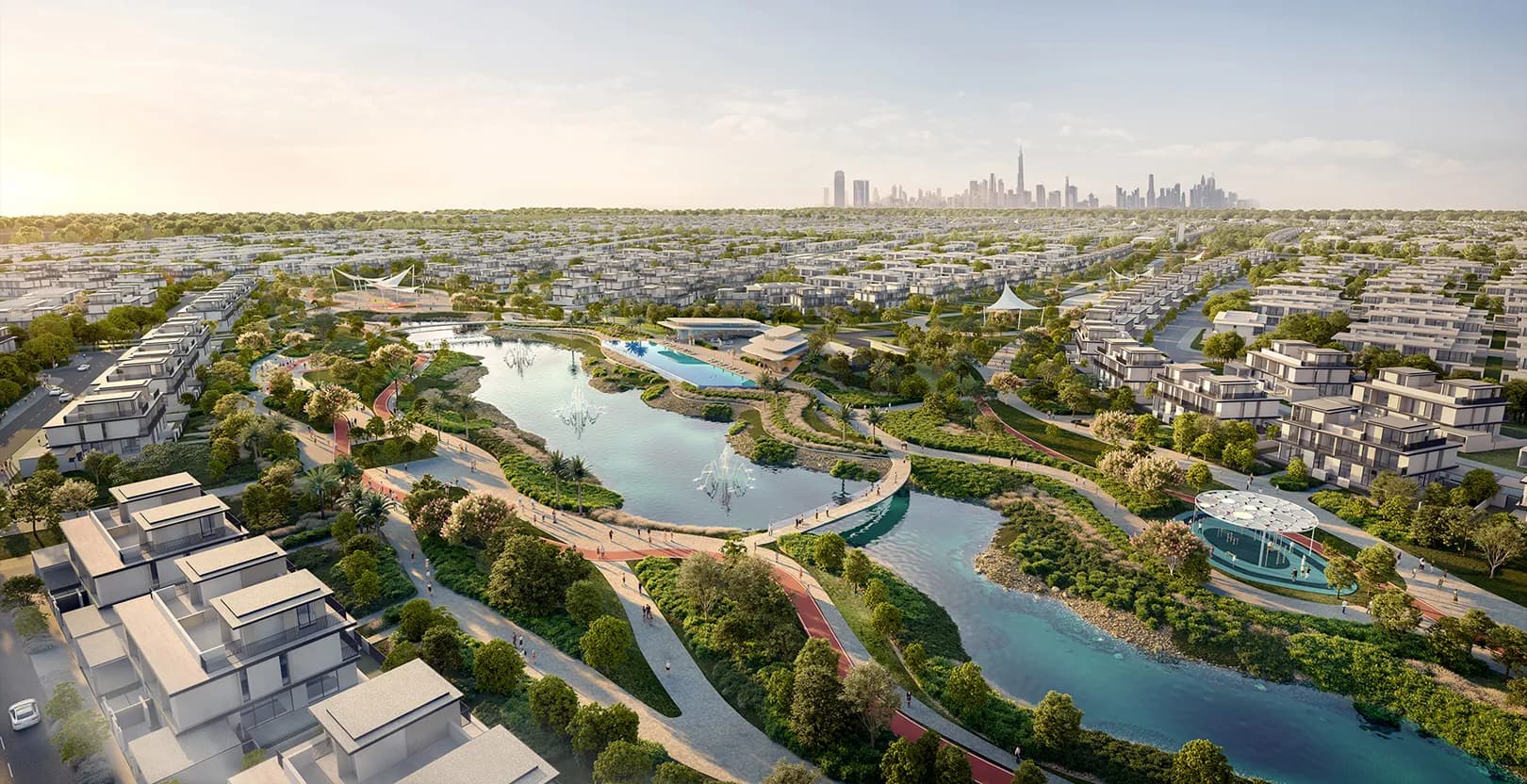
JVC is a large mixed-use residential community with an established population and growing demand for convenience-led retail and services. When evaluating a commercial unit in JVC, pay particular attention to visibility, accessibility, parking, residential catchment, competition and tenant demand.
02
Business Bay
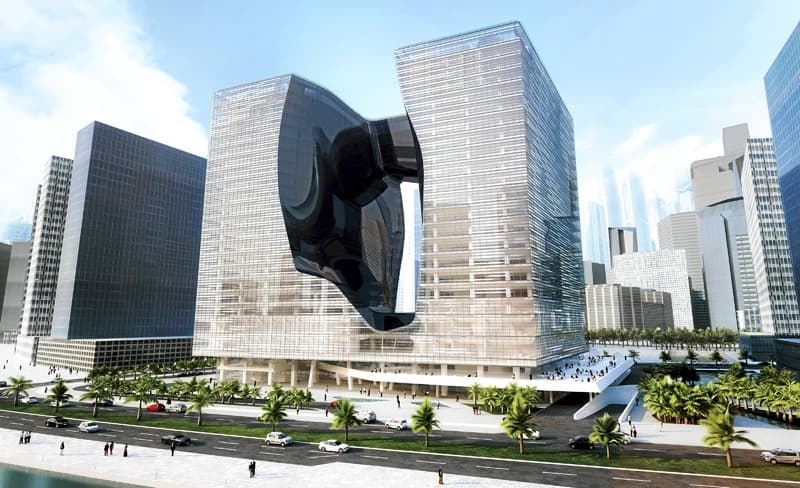
One of Dubai's major commercial and mixed-use districts, Business Bay can appeal to investors targeting offices, retail and business-oriented tenants. The area benefits from its central position and proximity to Downtown Dubai.
03
Jumeirah Lake Towers (JLT)
JLT combines offices, residences, retail and hospitality within an established mixed-use environment. Connectivity, tower quality, parking and tenant demand are important considerations.
04
Dubai Marina
Dubai Marina is a mature waterfront community with significant residential, hospitality and retail activity. Retail and service-oriented commercial properties can benefit from the surrounding population, but investors should pay close attention to accessibility, visibility, parking and rental pricing.
05
Dubai South
Dubai South represents an important emerging commercial and logistics corridor. It can be relevant for investors considering warehouses, logistics, industrial property, commercial plots and business facilities.
06
Al Quoz
Al Quoz is an established commercial and industrial area with warehouses, workshops, showrooms and businesses. It can be particularly relevant for investors looking for operational commercial assets rather than conventional office investments.
07
Dubai Investment Park
Dubai Investment Park offers a broad mix of industrial, logistics, commercial and business uses. It can be relevant for investors seeking larger operational properties and industrial assets.
Costs & diligence
Commercial property should be evaluated using the all-in acquisition cost.
Dubai Land Department fees
DLD registration and related transaction fees apply when purchasing property in Dubai. The exact fee structure and allocation should be confirmed for the specific transaction before completion.
VAT
Commercial real estate can be subject to 5% VAT in the UAE. VAT treatment can vary depending on the nature and structure of the transaction, so buyers should obtain appropriate tax advice.
Brokerage
Where a broker is involved, brokerage fees may apply. Confirm the commission, VAT treatment and payment terms before signing.
Service charges
Commercial owners in managed developments may have recurring service charges. These should be included in any rental-yield or investment calculation.
Fit-out
If purchasing a vacant unit, factor in the cost of preparing the property for occupation or leasing, including interior works, flooring, lighting, HVAC, plumbing, signage and business-specific equipment.
Top tips for first-time buyers
- 01Don't buy based on yield alone — a high advertised yield may hide vacancy risk, high expenses or unrealistic rental assumptions.
- 02Study the exact location — the performance of two properties in the same community can be completely different.
- 03Check permitted use — make sure the intended business activity is permitted before purchasing.
- 04Understand the tenant — for tenanted properties, review the tenant and lease rather than relying only on the annual rent.
- 05Calculate vacancy risk — commercial properties can experience longer vacancies depending on asset type and market conditions.
- 06Calculate the all-in cost — include acquisition costs, VAT where applicable, brokerage, service charges and fit-out.
- 07Compare market evidence — review comparable sales and rental evidence before deciding whether the property is fairly priced.
- 08Think about your exit — ask who is likely to buy this property from you in the future.
- 09Don't rush — commercial property is a long-term decision. Take time to compare several opportunities before committing capital.
- 10Work with a regulated professional — use appropriately licensed real estate professionals and verify property information through official channels.